Fourteen Centuries
of Honest Money.
Gold and silver are not commodities. In the Islamic tradition, they are a covenant — a standard of justice that no ruler may debase, no bank may inflate, and no generation may betray. This is their story. And ours.
وَأَقِيمُوا الْوَزْنَ بِالْقِسْطِ وَلَا تُخْسِرُوا الْمِيزَانَ And establish weight with justice, and do not make the balance deficient. Sūrah al-Rahmān, 55:9
This verse is not a metaphor. For fourteen centuries of Islamic civilisation, the scale was literal — the mithqāl and the dirham, weighed in the marketplace and before Allāh. The gold dinar and silver dirham were the physical embodiment of this command: honest weight, honest money, honest trade.
The First Islamic Dinar
The Prophet Muḥammad ﷺ transacted in gold and silver. The Companions weighed their transactions against established standards known before Islam: the mithqāl for gold and the dirham for silver. These were not invented by the Muslims — they were adopted, standardised, and sanctified.
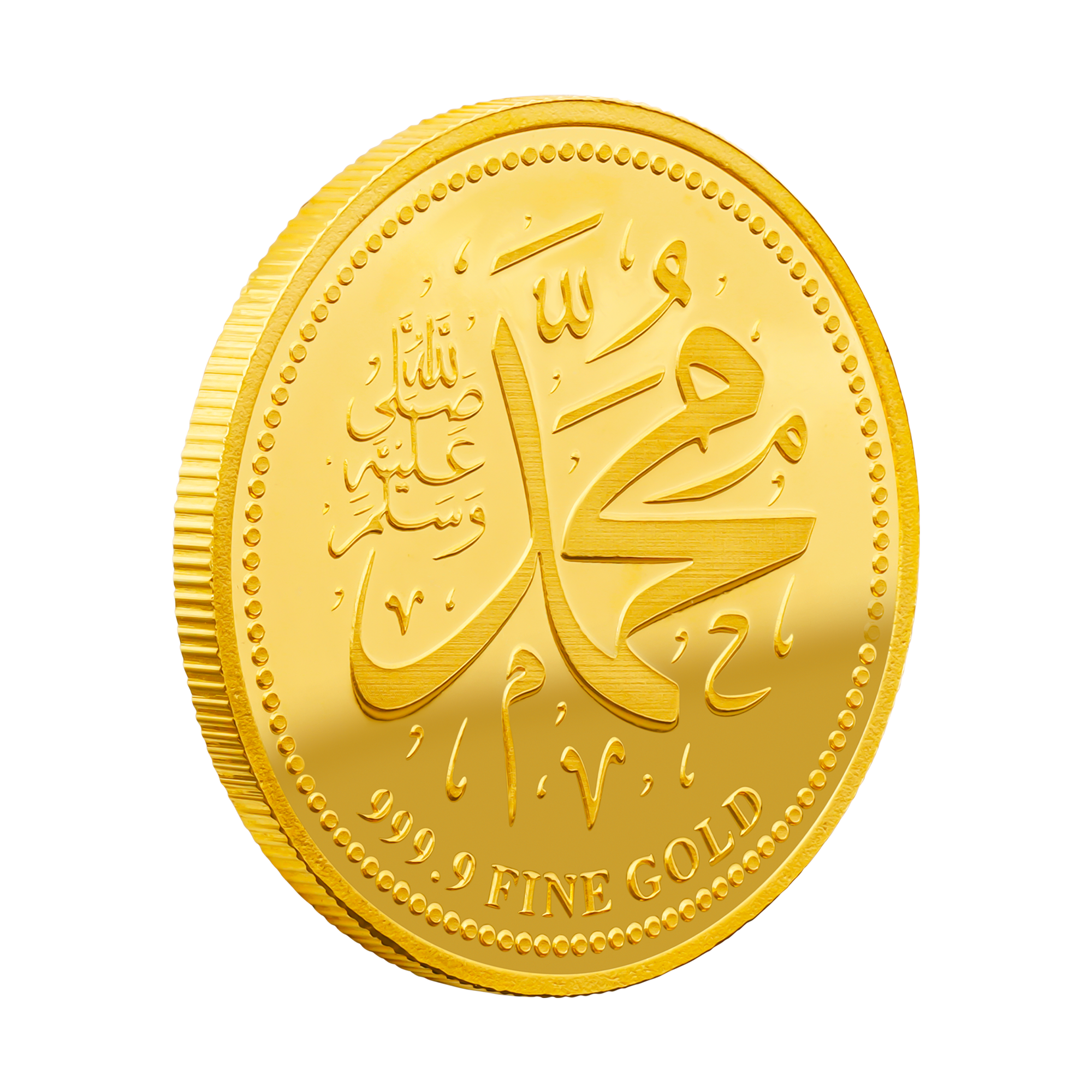
In 77 AH, the Umayyad Caliph ʿAbd al-Malik ibn Marwān issued the first distinctly Islamic gold dinar — inscribed not with the image of a king, but with the Shahādah and Quranic verse. It weighed exactly one mithqāl: 4.25 grams of 24K pure gold. This was not an administrative decision. It was a theological one. The coin declared what the Islamic state stood for: the word of Allāh, honest weight, and no graven image.
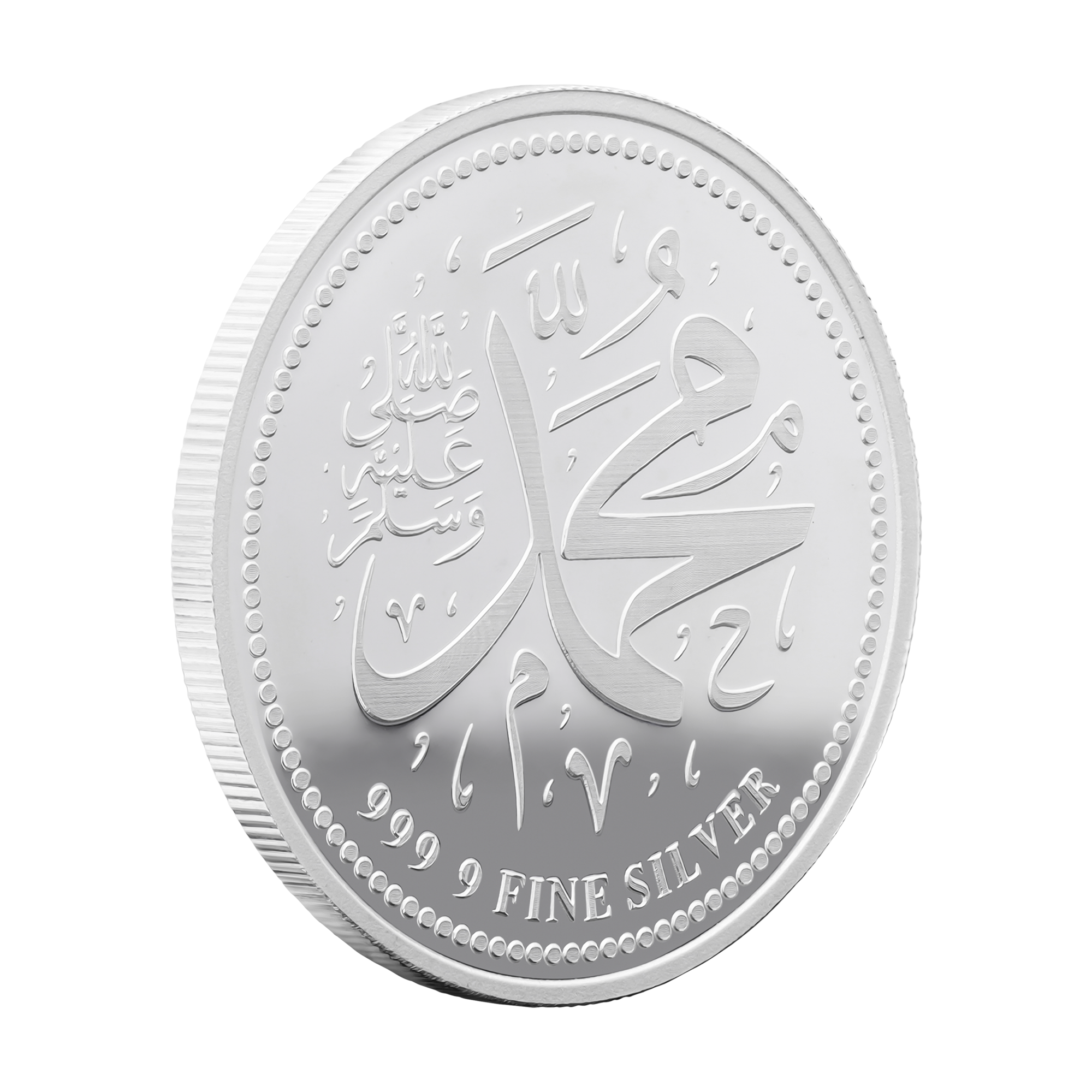
The silver dirham was fixed at 3.0 grams of 999 fine silver. The ratio between gold and silver — the bimetallic standard — remained the foundation of Islamic trade for centuries, cited in fiqh by Mālik, al-Shāfiʿī, Ibn Ḥanbal, and Abū Ḥanīfah alike.


The Age of the Dār al-Ḍarb
At the height of the Abbasid Caliphate, Baghdad was the wealthiest city on earth. At its centre stood the Dār al-Ḍarb — the House of Striking — the Islamic mint. From this institution flowed gold dinars that were accepted from the markets of Andalusia to the ports of Guangzhou.
The Islamic dinar was not merely currency. It was a universal guarantee. Merchants along the Silk Road, traders in the Indian Ocean spice routes, and scholars exchanging manuscripts in the great libraries all transacted in a coin whose weight and purity were beyond dispute. The mark of the Caliphate was a promise no king's edict could override — because it was grounded not in political authority but in divine command.
The great scholars of Islamic jurisprudence wrote extensively on the gold dinar in this era. Ibn Khaldūn observed in the Muqaddimah that gold and silver are the measure of all value — not because rulers decreed it, but because Allāh created them with intrinsic worth. Debasement, he wrote, is a form of injustice visited upon every holder of the currency.
The Century of Paper
The 19th century brought colonial administration to the Muslim world and, with it, the gradual displacement of the gold dinar and silver dirham. Paper currencies — backed first by colonial treasuries, then by nothing at all — replaced metal that had circulated honestly for a millennium.
In 1971, the United States severed the last formal link between the dollar and gold. The Bretton Woods system collapsed. The world's currencies became fiat — issued by governments, backed by faith alone, subject to inflation at the discretion of central banks. For Muslims, this was not merely an economic event. It was the final institutional abandonment of the Quranic command to keep the balance honest.
The consequences were not abstract. Zakat calculations became entangled with paper values that fluctuate. Mahr dowries lost their fixed, real-world anchor. The Islamic injunction against riba became increasingly difficult to navigate in a system built entirely on interest-bearing debt. The gold dinar and silver dirham had not been abolished — they had simply been forgotten.
The Return of the Dinar
At the turn of the 21st century, a growing movement of Islamic scholars, economists, and minting specialists began to challenge the assumption that the gold dinar was a relic. The World Islamic Mint convened in Kuala Lumpur in 2002. The state of Kelantan, Malaysia, minted gold dinars for public use. Scholars in the Gulf, Europe, and Southeast Asia began issuing fatwas affirming the religious merit of holding and transacting in physical gold and silver.
The Islamic Monetary Council (IMC) was established to provide a consistent, internationally recognised certification standard for gold dinars and silver dirhams — ensuring that any coin bearing the IMC mark conforms to the classical specifications cited in fiqh. The IMC's work has since been extended through the Islamic Digital Certification Council (IDCC), which issues blockchain-recorded Tayyib IDs: tamper-proof certificates that give every coin a permanent, verifiable identity.
Dubai emerged as the natural home of this revival. At the crossroads of the global gold trade, with deep Islamic heritage and a regulatory environment that respects physical precious metals, Dubai became the city where the ancient standard could be made new again.
Amanah Gold — The Continuation of a Covenant
Amanah Gold was not founded to sell precious metals. It was founded to continue a fourteen-century tradition — to make it possible, once again, for a Muslim in Dubai or London or Lahore to hold gold and silver in the way their faith has always intended.
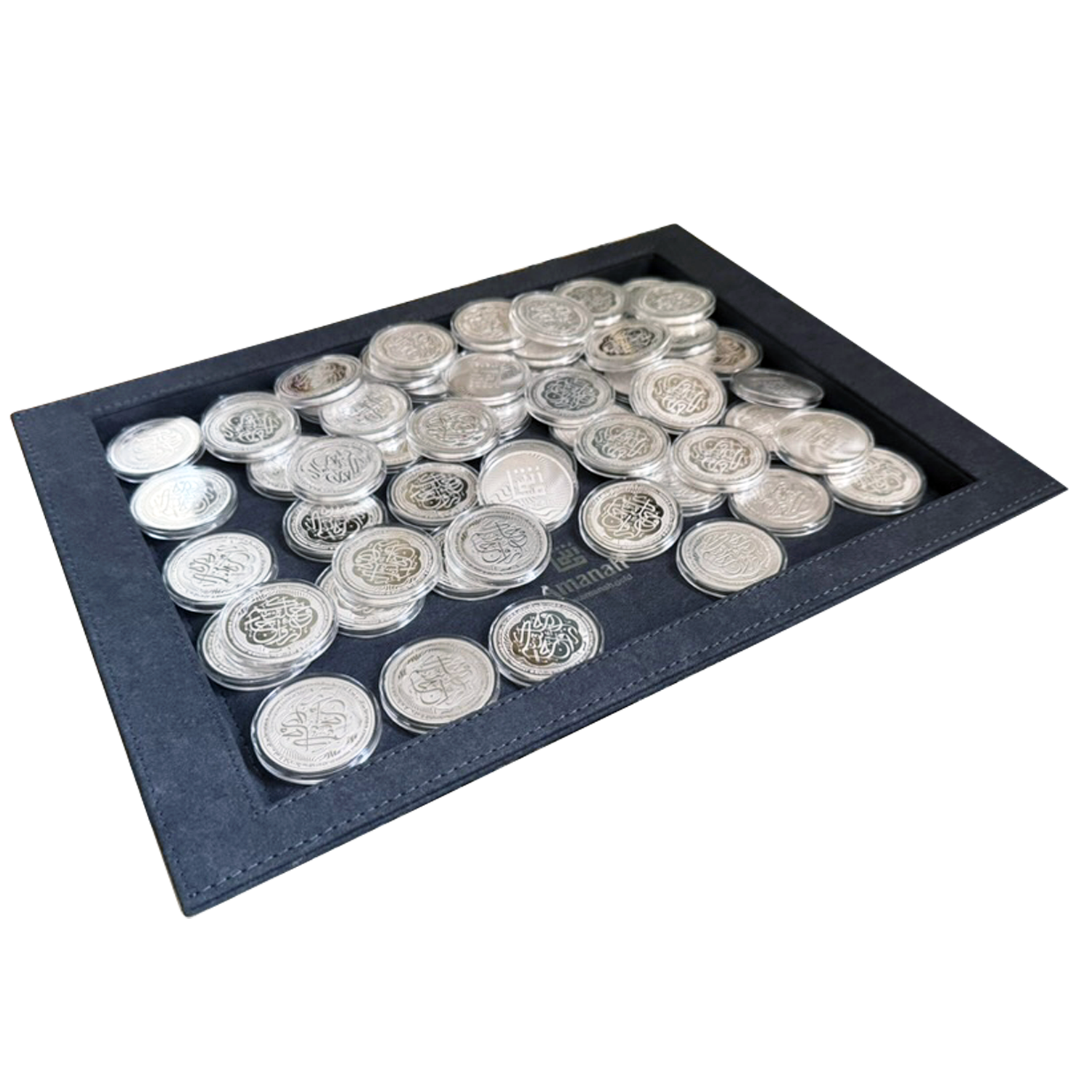
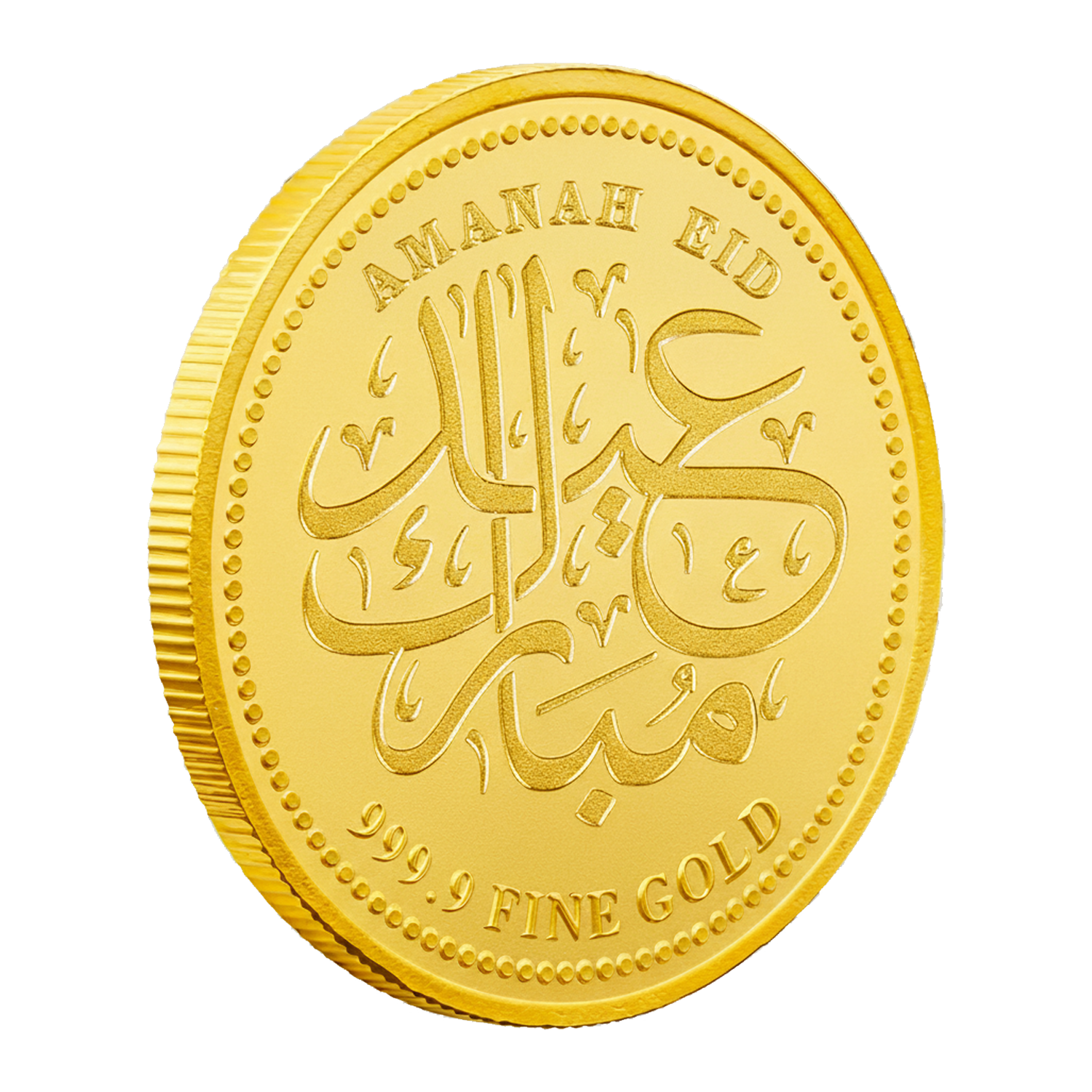
Every coin we produce is minted to the classical specification: 4.25 grams of 24K 999.9 fine gold for the dinar; 3.0 grams of 999 fine silver for the dirham. Every coin is registered with the Islamic Monetary Council (IMC) and carries a Tayyib ID from the Islamic Digital Certification Council (IDCC) — linking the physical weight of the Sunnah to the permanence of the blockchain.
Our name is a deliberate choice. Amānah — trust — is not a brand value. It is an obligation. When ʿAbd al-Malik ibn Marwān replaced the emperor's face with the Shahādah in 77 AH, he was making a statement about what an Islamic coin stands for. We carry that statement forward. Not as a relic. As a living standard.
مَنِ اسْتَطَاعَ مِنْكُمْ أَنْ لَا يَكُونَ بَيْنَهُ وَبَيْنَ رِزْقِهِ حِجَابٌ فَلْيَفْعَلْ "Whoever among you is able to let nothing stand between him and his sustenance, let him do so." al-Bayhaqī